
New here? See how we test every claim →
Bitcoin Is Too Complicated for Mass Adoption
Is Bitcoin too complicated for ordinary people to use? The protocol is complicated. Using it often is not. This article separates the two and looks at who is already using Bitcoin without understanding how it works.
Is Bitcoin too complicated for mass adoption? Not for the people using it. The complexity lives in the protocol, where it does a job out of sight. At the user layer, buying and holding Bitcoin through a regulated app is about as hard as using a banking app. Most people use the internet and hold dollars without understanding the systems behind them. Self-custody, where you hold your own keys, is harder and takes real learning, but nobody has to start there. Some of the most compelling Bitcoin use comes from people with a practical reason to use it and no interest in the technology.
You Already Use Money You Do Not Understand
Bitcoin is complicated. There is no point pretending otherwise. The cryptography, the consensus rules, and the way thousands of independent computers agree on one ledger without a central authority are hard problems, and the people who maintain it are doing serious engineering. The interesting question is how much of that a user has to deal with.
Compare it with the money you use today. Most people spend dollars, euros, or pesos without knowing how central banks set interest rates, what fractional reserve banking is, or how a bank creates new money when it makes a loan. They use whatever is around them. Gold worked as money for thousands of years while almost no one could explain how it was refined.
The Protocol Is Not the Product
Critics often compare Bitcoin’s base layer to Visa or PayPal and call it slow. It was never built to be a checkout button. Its job is final settlement, and faster payment systems can operate on top of it.
The internet works the same way. TCP/IP, HTTP, and SMTP are old, dense, and understood by almost no one, yet you are using them right now. The complexity stayed at the bottom, and simple tools were built on top. Myth #16: Do Miners Control Bitcoin? examines that base-layer machinery in detail.
How Hard Is Bitcoin to Use Today
Even if the protocol stays hidden, a fair critic asks whether the tools on top are usable. A decade ago the answer was shaky. The apps were niche and mobile-only, full of small traps, with no customer service when something went wrong. That has changed.
Today those options sit on the screens a saver already uses. Cash App and PayPal sell Bitcoin in a few taps. Fidelity holds it with the same apps and support as any brokerage account. A Roth IRA or a health savings account can hold it through an exchange-traded fund, next to the usual stocks and bonds. Hardware walletsA small dedicated device that stores your private keys offline and signs transactions, keeping the keys off any internet-connected computer. have turned private-key management into a guided process built around a recovery phraseA list of 12 to 24 ordinary words that backs up a wallet’s private keys. Anyone with the words can restore the wallet and spend the bitcoin..
Self-custody is the part that really does take learning. Holding your own keys means keeping a recovery phrase safe, and if it is lost, nobody can restore it for you. It is also optional. Bitcoin does not eliminate trust. You still choose what to trust, whether that is an exchange, a custodian, wallet software, or your own ability to hold the keys. What changes is that holding your own keys stays available if you want it.
Who Is Already Using It
If complexity were the barrier, you would expect Bitcoin use to be concentrated among engineers. It is not. As Alex Gladstein of the Human Rights Foundation documents, some of the most compelling real-world use comes from non-technical people with a practical reason to use it.
In a rural village in Malawi, residents who could not describe a hash function understood what Bitcoin was doing for them. Mining created the commercial incentive to bring electricity to the town for the first time, which meant children could study after dark and families could refrigerate medicine.
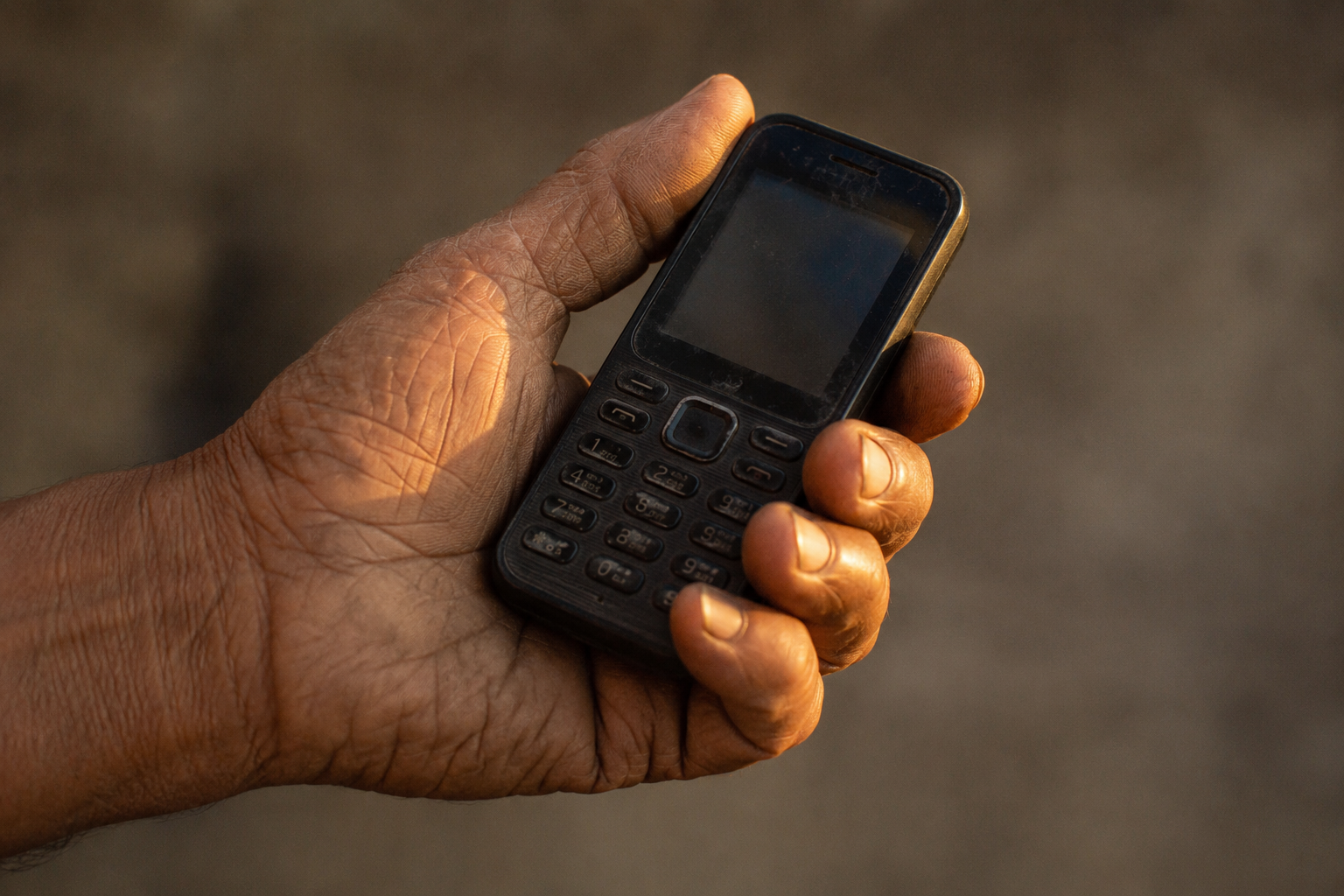
Across Africa, a service called Machankura connects ordinary feature phones to Bitcoin’s Lightning NetworkA payment layer built on top of Bitcoin that settles small transactions almost instantly and at very low cost. through USSDA basic phone-menu system that runs over the cellular network, the same technology behind mobile money, needing no smartphone and no internet connection., the same menus used for mobile money. The phone needs no smartphone, no data plan, and no internet connection of its own. For the 1.4 billion adults worldwide with no bank account, that matters, because using Bitcoin directly does not need a bank’s permission. Buying it through a regulated service can still require ID. Source: CoinDesk on Machankura
The feature phone is not settling Bitcoin by itself. It is a way into Bitcoin through menus people already know.All Roads Lead to Bitcoin
The same practical logic shows up where official money breaks. People in places like Nigeria and Argentina have moved savings into Bitcoin to get away from currencies losing value. In Gaza and Afghanistan, banking blockades made sending dollars impossible, and Bitcoin has at times been used to deliver aid. For many of them the alternative was watching savings evaporate to inflation.
What Is Left to Learn
What a saver is signing up for is simpler than the software. It is a supply fixed at 21 million that no government, central bank, or committee can dilute. That takes no code to grasp. A person can understand that dollars can be created without limit while the Bitcoin in their wallet cannot.
Bitcoin is complicated under the hood. So is the internet, and so is the banking system. Most people use both without understanding either.
Bitcoin still has usability problems, especially around self-custody. Those problems are real, and the industry has work left to do. But “too complicated for ordinary people” puts the bar in the wrong place.
The better question is whether Bitcoin becomes useful enough that people are willing to learn what they need to learn. In some places, they already are.
This article is part of the Bitcoin Myths series. To explore the full Bitcoin Myths series, start with the hub page where 20 common myths are mapped and linked.
Prefer to watch?
The video version runs about five minutes. It separates how complicated a system is under the hood from how hard it is to actually use, starting with the card tap nobody understands and everybody manages. What you are opting into is the question left standing.
Go Deeper
The foundational case for Bitcoin as sound money. It makes the point this article rests on. What gives a money its appeal is its monetary properties, not the technical literacy of the people who hold it.
The projects and ideas that came before Bitcoin. Useful background for seeing how a decentralized protocol can sit underneath simple, convenient services.
A history of money through the lens of technology. Useful for understanding why people in failing economies reach for a harder money, and how open standards like TCP/IP compare.
Want the shorter version? The Did You Know post covers this one in brief, and the infographic version shows who handles the complexity, you versus the protocol, in one shareable one-pager.
Frequently Asked Questions
Is Bitcoin too complicated to use?
Not at the user layer. The complexity people point to lives in the protocol, which does its work out of sight. Buying and holding Bitcoin through an app like Cash App, PayPal, or Fidelity is about as hard as using a banking app, and some people use it from basic feature phones. Self-custody, which means holding your own keys, is harder and takes real learning, but nobody has to start there.
Do I need to understand the blockchain to use Bitcoin?
No. Most people use the internet without understanding its protocols and hold dollars without understanding how central banks create money. The cryptography and consensus rules sit underneath, and the user works with simple tools. What helps is a basic grasp of what you hold, such as the fixed supply of 21 million, and how to keep your account or keys safe.
Is self-custody too hard for ordinary people?
Self-custody is the hardest part of Bitcoin for most beginners, and it is optional. You can start with a regulated exchange or app and learn about hardware wallets and recovery phrases later. Bitcoin does not remove trust. You choose what to trust, whether that is an exchange, a custodian, wallet software, or your own ability to hold the keys. The difference is that holding your own keys stays available.

A service called Machankura connects basic feature phones in eight African countries to the Lightning Network through USSD, the same phone menus used for mobile money. The phone needs no smartphone and no data plan. It shows that the part of Bitcoin a person touches can be a numbered menu.
Sources: Machankura (8333.mobi) and CoinDesk, 2023From the book
This myth is one chapter of Reasonable Doubt.
All twenty myths from this series, revised and rechecked, in one book you can read start to finish or hand to the skeptic in your life. Same standard as the site: the strongest version of each objection, the evidence, and a verdict that goes no further than the evidence does.
Paperback · $9.99 Kindle · $4.99 or free with Kindle Unlimited Listen on Spotify
New to Bitcoin? Start with the free guide, You Just Came Into Money. Now What?
Bitcoin Myths, Examined One by One
This article is part of the Bitcoin Myths series at allroadsbitcoin.com. Twenty claims about Bitcoin, each examined against the data. No price predictions. No hype. Just evidence.
Explore the Full SeriesMore from the Bitcoin Myths Series
- All 20 Myths
- Myth #1 · Energy
- Myth #2 · Volatility
- Myth #3 · Crime
- Myth #4 · Bubble
- Myth #5 · Gov Ban
- Myth #6 · Divisibility
- Myth #7 · Physical Form
- Myth #8 · Altcoins
- Myth #9 · Real Estate
- Myth #10 · Wallets
- Myth #11 · Exchanges
- Myth #12 · Reset
- Myth #13 · Gold
- Myth #14 · Intrinsic Value
- Myth #15 · Greater Fool
- Myth #16 · Miners
- Myth #17 · Ponzi
- Myth #18 · Complexity
- Myth #19 · Acceptance
- Myth #20 · Unit of Account
Everything on this site is for educational purposes only. It is not financial, investment, tax, or legal advice. Bitcoin carries real risk. Prices move. Do your own research, think for yourself, and speak with a qualified professional before acting on anything you read here.