
New here? See how we test every claim →
Your Bitcoin Is Yours on an Exchange
When you buy bitcoin on an exchange and leave it there, it feels like ownership. The balance appears in your account, the price moves with the market, and nothing seems wrong. But exchange custody and direct ownership are two different things, and understanding the difference is the most practical thing a new bitcoin holder can learn.
Keeping bitcoin on an exchange is a custodial arrangement, not direct ownership. The exchange holds the private keys; you hold a balance in their system. For most beginners, that is a reasonable starting point, but it introduces counterparty risk that self-custody eliminates. Understanding that tradeoff is what separates an informed choice from an assumption.
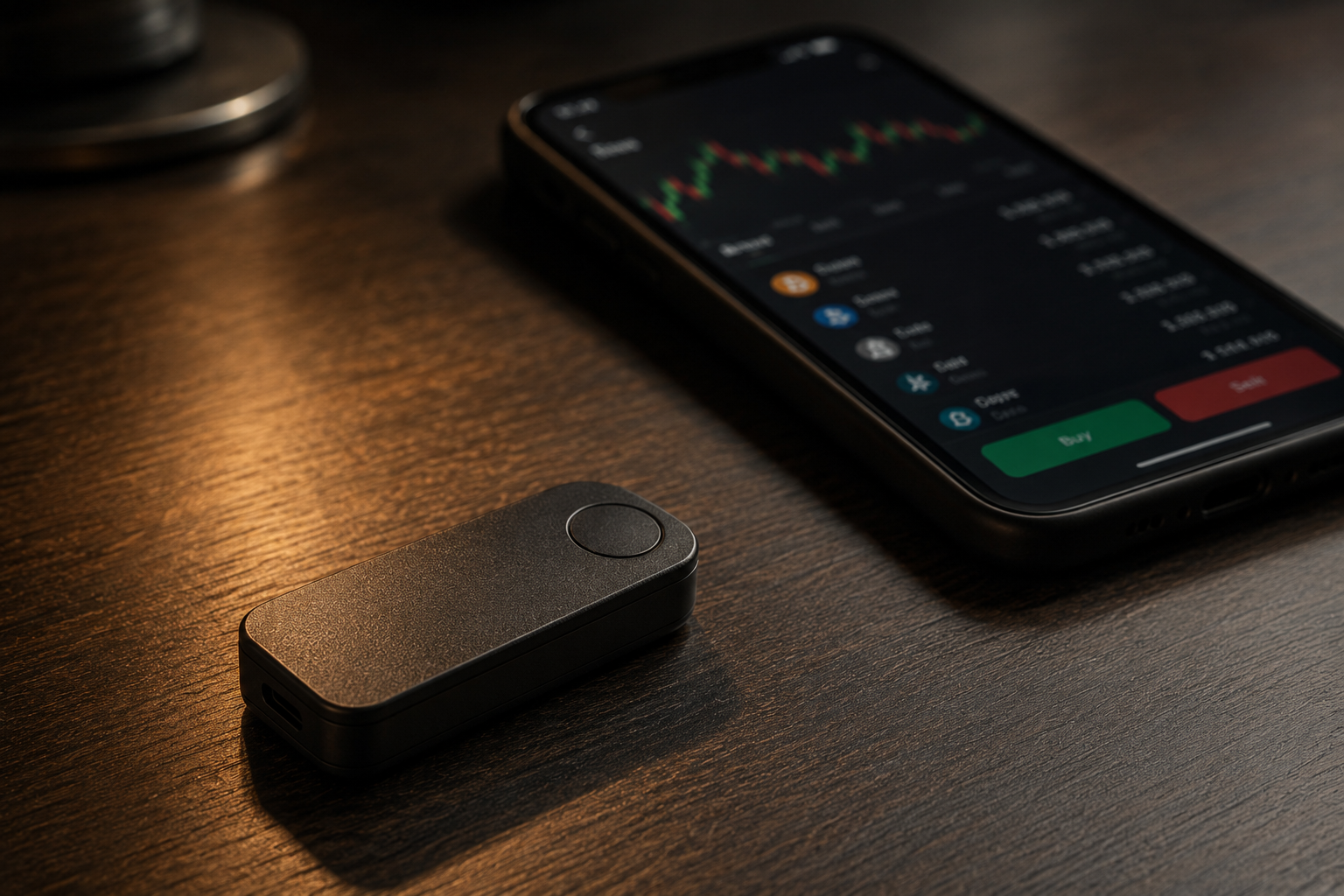
There is a version of bitcoin ownership that most people start with. You open an account on a major exchange, complete the verification, buy some bitcoin, and the balance appears on your screen. It feels like ownership because it looks like ownership. The number goes up when the price goes up. You can sell whenever you want. Nothing looks missing.
What is missing is not visible in the interface. It is in the question of who holds the private keysA secret cryptographic number that proves the right to move bitcoin from an address. Whoever holds it controls the bitcoin. and what a wallet actually controls.
As the Bitcoin Myths series at allroadsbitcoin.com established in Myth #10, bitcoin does not live in a wallet or on a device. It exists as a record on the Bitcoin blockchain, and the entity that controls it is whoever holds the private keys. When you buy bitcoin on an exchange and leave it there, the exchange holds those keys. You hold a balance in their internal accounting system, a record of what they owe you, not direct control over the on-chain bitcoin itself.
That is not necessarily a reason to panic. But it is a distinction worth understanding clearly, because it changes what you actually own and what risks you are actually taking.
What Keeping Bitcoin on an Exchange Actually Means
When you deposit money in a bank, you do not own the physical dollars. You own a claim, a legal promise that the bank will return your money on demand. The bank holds the money, lends it out, and manages the risk. You trust the institution to make good on its promise.
Exchange custody works the same way, with one important difference. A bank deposit is backed by deposit insurance, regulatory capital requirements, and centuries of legal infrastructure. Exchange custody, depending on where you are in the world and which platform you use, may have some of those protections, or very few of them.
What the exchange holds on your behalf is the private key, the cryptographic credential that proves ownership of a specific amount of value on the Bitcoin blockchain. As long as the exchange is solvent, secure, and willing to process your withdrawal, the arrangement is invisible and convenient. The risk only becomes visible when one of those conditions breaks down.
This is not a theoretical concern. It has happened, more than once, at exchanges that once seemed permanent.
The Risks Are Real, Even If They Are Not Certain
Two exchange failures have shaped how serious bitcoin holders think about custody. Neither was inevitable, and neither can be dismissed.
In 2014, Mt. Gox (then the largest Bitcoin exchange in the world, handling the majority of all global trading volume) collapsed. Approximately 850,000 bitcoin belonging to customers and the company had gone missing, representing around 7 percent of all bitcoin in existence at the time. The theft had been occurring gradually since 2011 without detection. Customers who believed their bitcoin was safe in their accounts discovered it was not.
In 2022, FTX collapsed with an $8 billion hole in its customer accounts. The funds had been moved to a sister trading firm and used in ways that customers had never agreed to. In this case, the story has a partial resolution. FTX customers are being repaid through bankruptcy proceedings, with some receiving interest on their losses. The legal process worked. But it took years, required lawyers and courts, and depended on recoverable assets existing in the first place.
Neither story means that all exchanges are fraudulent. Coinbase is publicly listed and audited. Kraken has operated for over a decade with a strong security record. River is Bitcoin-only, holds customer funds in segregated accounts, and is built around the principle that you can move your bitcoin out at any time. There is a meaningful difference between regulated, transparent exchanges and platforms that operate without oversight.
What both stories clarify is that exchange custody introduces a category of risk that self-custodyHolding your own private keys yourself, typically on a hardware wallet, so no third party can move or freeze your bitcoin. eliminates entirely. It is the risk that the institution holding your keys makes decisions you did not agree to, or cannot survive the consequences of its own choices.

After the FTX collapse in November 2022, bitcoin began leaving centralized exchanges at a pace not seen since 2017. By April 2026, the total bitcoin held on exchanges had fallen to approximately 2.4 million BTC, a seven-year low. The market did not wait for new regulations. It moved first.
Source: Glassnode via OurCryptoTalk, 2026What the Market Learned
The post-FTX shift was measurable. Bitcoin on exchanges fell to a seven-year low by 2026. More than 72 percent of all mined bitcoin is now classified as illiquidHeld in a way that is not readily traded or sold. Bitcoin that has not moved in a long time, often in long-term storage, is counted as illiquid., held in wallets that have not moved their bitcoin in over a year, much of it in long-term storage outside active exchange circulation.
The population of bitcoin holders, in aggregate, decided that the convenience of exchange custody was worth less than they had assumed. Once the risk was visible, rather than theoretical, behavior changed.
This does not mean that everyone with bitcoin on an exchange made the wrong decision. Many did not. It means that the market recalibrated, and that recalibration points in a clear direction. Over time, the holders who care most about what they own tend to move toward holding the keys themselves.
When Self-Custody Makes Sense
It depends. Keeping bitcoin on an exchange turns on the amount, your comfort with technology, and how long you plan to hold.
For someone who just bought their first $100 in bitcoin on a reputable exchange and is still learning what a private key is, leaving it there is a reasonable starting point. The risk is real but proportionate. Almost no one learns how a thing works before they start using it, and bitcoin is no different. You pick up self-custody as you go, not before.
The natural inflection point for most people is when the amount held starts to feel significant relative to their financial life. At that point, the question shifts from “is this convenient?” to “am I comfortable with someone else controlling access to this?” A hardware walletA small dedicated device that stores your private keys offline and signs transactions, keeping the keys off any internet-connected computer. moves the private keys onto a device you hold, offline, with no counterpartyThe other party you must rely on in an arrangement. An exchange holding your keys is a counterparty; self-custody removes it. between you and your bitcoin.
If you are looking for a starting place that takes the eventual move to self-custody seriously, River is worth considering. It is a Bitcoin-only platform, built around long-term ownership rather than trading, with direct withdrawal to a personal wallet when you are ready to make that move. (affiliate link, see our disclosure)
Not your keys, not your coins.
That principle is true. It is also not a deadline. It is a destination that most serious bitcoin holders reach when both the amount and their understanding get there. The goal is not to shame anyone out of where they are starting. It is to make sure they understand the difference between where they are and where they could be.
This is part of the ongoing Bitcoin Myths series at allroadsbitcoin.com, where you can explore all 20 myths and everything published so far.
Go Deeper
The most direct treatment of exchange risks, hardware wallets, and the “not your keys, not your coins” principle. Written specifically for new bitcoin holders navigating their first custody decisions.
The foundational economic case for Bitcoin as sound money, including the argument for individual monetary sovereignty and the long-run cost of trusting monetary intermediaries.
Why a bank balance, an exchange balance, and bitcoin you hold yourself are not the same thing. Bhatia maps money into layers of claims and bearer assets, which is exactly the distinction between holding an IOU on an exchange and holding the keys directly.
Want the shorter version? Read the Did You Know post. Prefer a visual? The infographic version lays out the argument in one shareable one-pager.
Prefer to watch?
This myth is also a short video. It walks through the same idea in a few minutes: why an exchange balance is a claim rather than the coins, and the real frame of convenience versus counterparty risk.
Frequently Asked Questions
Is it safe to leave bitcoin on Coinbase or Kraken?
Major regulated exchanges like Coinbase and Kraken carry real protections. They are audited, insured to varying degrees, and subject to regulatory oversight. Leaving a small amount there while you learn is a reasonable starting point. The risk is not zero. Exchange custody means the exchange holds your private keys, and your access depends on the platform remaining solvent and willing to process withdrawals. For amounts that feel significant to your financial life, moving to a hardware wallet eliminates that counterparty risk entirely.
What is the difference between exchange custody and self-custody?
Exchange custody means the exchange holds the private keys to your bitcoin on your behalf. You hold a balance in their system. Self-custody means you hold the private keys directly, typically on a hardware wallet kept offline. The distinction matters because whoever holds the private keys controls the bitcoin. With self-custody, that is you. With exchange custody, that is the platform.
How do I know when I am ready for a hardware wallet?
The natural inflection point for most people is when the amount they hold starts to feel significant relative to their financial life. At that point, the question shifts from convenience to control. Hardware wallets are not technically complex to set up and they eliminate the counterparty risk that exchange custody introduces. If you find yourself asking the question, you are probably ready.
From the book
This myth is one chapter of Reasonable Doubt.
All twenty myths from this series, revised and rechecked, in one book you can read start to finish or hand to the skeptic in your life. Same standard as the site: the strongest version of each objection, the evidence, and a verdict that goes no further than the evidence does.
Paperback · $9.99 Kindle · $4.99 or free with Kindle Unlimited Listen on Spotify
New to Bitcoin? Start with the free guide, You Just Came Into Money. Now What?
Ready to Read the Full Series?
Ten myths down, ten to go. The Bitcoin Myths series covers every major misconception, one structured argument at a time.
Explore All 20 MythsMore from the Bitcoin Myths Series
- All 20 Myths
- Myth #1 · Energy
- Myth #2 · Volatility
- Myth #3 · Crime
- Myth #4 · Bubble
- Myth #5 · Gov Ban
- Myth #6 · Divisibility
- Myth #7 · Physical Form
- Myth #8 · Altcoins
- Myth #9 · Real Estate
- Myth #10 · Wallets
- Myth #11 · Exchanges
- Myth #12 · Reset
- Myth #13 · Gold
- Myth #14 · Intrinsic Value
- Myth #15 · Greater Fool
- Myth #16 · Miners
- Myth #17 · Ponzi
- Myth #18 · Complexity
- Myth #19 · Acceptance
- Myth #20 · Unit of Account
Everything on this site is for educational purposes only. It is not financial, investment, tax, or legal advice. Bitcoin carries real risk. Prices move. Do your own research, think for yourself, and speak with a qualified professional before acting on anything you read here.