
New here? See how we test every claim →
Bitcoin Is Too Complicated for Mass Adoption
Is Bitcoin too complicated for ordinary people to adopt? This article at allroadsbitcoin.com separates the complexity of the protocol from the experience of the user, and shows that the test a money has to pass has never been whether people understand it, only whether it works.
Is Bitcoin too complicated for mass adoption? No. The complexity people point to lives at the protocol layer, where it is a feature, not at the user layer, where buying and holding Bitcoin is now about as hard as using a banking app. Nobody understands the TCP/IP protocols that route their email, and almost nobody understands how central banks create money, yet billions use the internet and hold fiat every day. People adopt a money for what it does, not for how it works. The fastest Bitcoin adoption on earth is happening among non-technical people in economies where the local currency is failing, who care about the result and not the code. The people who need Bitcoin most are rarely the people who understand it best.
You Already Use Money You Do Not Understand
Nobody has ever been required to understand money before using it. Start with the part of the claim that is true. Bitcoin’s inner workings are complex. The cryptography, the consensus rules, and the way thousands of independent computers agree on a single ledger without a central authority are all hard problems, and the people who maintain it are doing serious engineering. None of that is in dispute.
The leap is the assumption that a user has to understand any of it. Hold that assumption up against the money you use today. Most people spend dollars, euros, or pesos without the faintest idea of how central banks set interest rates, what fractional reserve banking is, or how a commercial bank conjures new money into existence the moment it makes a loan. They did not choose their currency after studying monetary policy. They use whatever is around them, the least bad option on offer, and they trust it because everyone else does too.
Complexity has never been the test a money has to pass. Usefulness is. Gold worked as money for thousands of years while almost no one could explain why it was scarce or how it was refined. The dollar works today even though the system behind it would take a graduate degree to map. If understanding the machinery were a requirement for adoption, no money in history would have qualified.
The Protocol Is Not the Product
The most common version of this myth compares Bitcoin’s base layer to Visa or PayPal and concludes it is clumsy and slow. That is a category error. The base chain is not trying to be a checkout button. It is a settlement layer, designed for final, high-value transactions, and it trades speed for security and decentralization deliberately.
The internet works the same way, in layers. The protocols underneath it, TCP/IP, HTTP, SMTP, are old, dense, and understood by almost no one. You have never read them and never will, yet you are using them right now to load this page and you will use them again to send your next email. Nobody decided the internet was too complicated for mass adoption because packet switching is hard. The complexity stayed at the bottom, and simple tools were built on top. Bitcoin is following the same path. The protocol stays at the base, and everyday use moves to the layers built on top of it. Myth #16: Do Miners Control Bitcoin? examines that base-layer machinery in detail.
You are using protocols you have never read to load this sentence. Bitcoin asks no more of you than the internet already does.All Roads Lead to Bitcoin
How Hard Is Bitcoin to Use Today
Even granting that the protocol stays hidden, a fair critic asks whether the tools on top are actually usable. A decade ago the answer was shaky. The apps were niche and mobile-only, full of small traps, with no customer service when something went wrong. That era is over.
Today those options sit on the screens a saver already uses. Cash App and PayPal sell Bitcoin in a few taps. Fidelity holds it with the same apps and support as any brokerage account. A Roth IRA or a health savings account can hold it through an exchange-traded fund, right alongside the usual stocks and bonds. Hardware walletsA small dedicated device that stores your private keys offline and signs transactions, keeping the keys off any internet-connected computer. have turned private-key management into a guided process built around a simple recovery phraseA list of 12 to 24 ordinary words that backs up a wallet’s private keys. Anyone with the words can restore the wallet and spend the bitcoin..
An iPhone works the same way. Nobody needs to understand the engineering inside one to benefit from it. A Bitcoin user can treat the asset as a better version of a high-yield savings account without ever touching the protocol layer. Complexity, where any remains, is something a person grows into as their holdings grow, not a gate they have to clear before they can begin.
The Fastest Adopters Are Not Experts
If complexity were really the barrier, you would expect adoption to track technical sophistication, concentrated among engineers in wealthy countries. The opposite is happening. As Alex Gladstein of the Human Rights Foundation documents, some of the fastest-growing real-world adoption is among non-technical people who turn to Bitcoin because it solves a problem nothing else can.
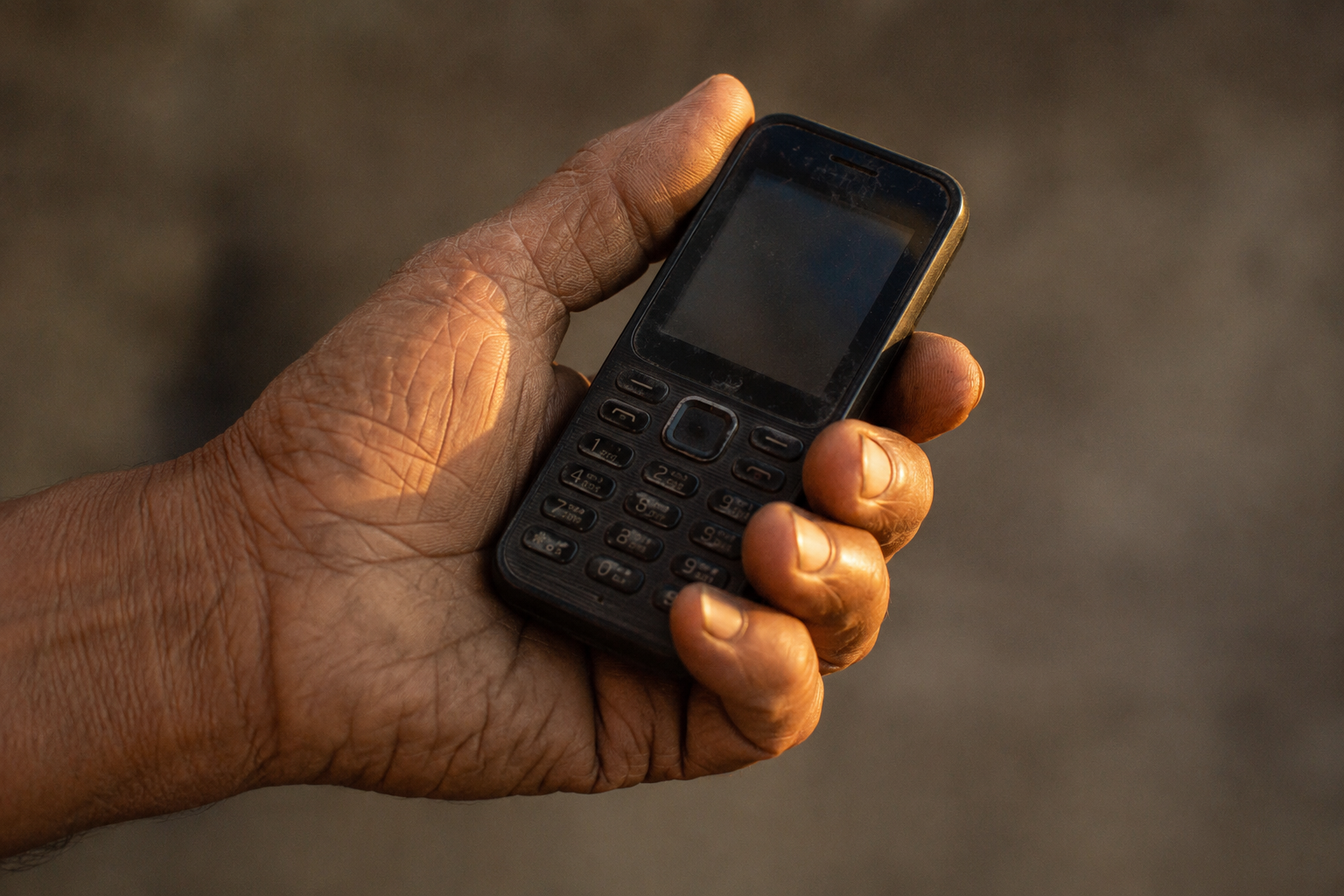
In a rural village in Malawi, residents who could not describe a hash function understood exactly what Bitcoin was doing for them. Mining created the commercial incentive to bring electricity to the town for the first time, which meant children could study after dark and families could refrigerate medicine. They cared about the result, not the protocol. Across Africa, a service called Machankura connects ordinary feature phones to Bitcoin’s Lightning NetworkA payment layer built on top of Bitcoin that settles small transactions almost instantly and at very low cost. through USSDA basic phone-menu system that runs over the cellular network, the same technology behind mobile money, needing no smartphone and no internet connection., the same dial-up menus used for mobile money, so people send and receive Bitcoin with no smartphone, no data plan, and no internet connection on their device. For the 1.4 billion adults worldwide with no bank account, Bitcoin is in one respect simpler than the traditional system, because it asks for no identity documents and no permission. Source: CoinDesk on Machankura
The same pattern shows up wherever the official money breaks. Adoption is growing fastest in countries like Nigeria and Argentina, where people move into Bitcoin to escape currencies losing value by the month. In Gaza and Afghanistan, under banking blockades that made sending dollars impossible, Bitcoin has at times been the only rail capable of delivering aid. None of these people adopted Bitcoin because they found the cryptography elegant. They adopted it because it worked when the alternative was watching their savings evaporate to inflation.
What You Are Actually Adopting Is the Monetary Policy
Step back and ask what a saver is really signing up for. It is not the software. It is the monetary policy. For most holders, the heart of the case is simple. It is a supply fixed at 21 million units that no government, central bank, or committee can dilute. That proposition takes no code to grasp. A person does not need to read the code to understand that the dollars in their account can be created without limit while the Bitcoin in their wallet cannot. The math becomes undeniable long before the software does.
Time does the rest of the work. The longer the network runs without failing, the lower the implied odds that it ever will, an instinct sometimes called the Lindy effectThe idea that the longer something nonperishable has already survived, the longer it is likely to keep surviving.. Bitcoin may also be moving through the stages Vijay Boyapati lays out in The Bullish Case for Bitcoin, from collectible, to store of value, and potentially toward everyday medium of exchange. Whether it completes that path is not settled, but each step would turn on the market deepening and the price steadying, not on users learning the protocol. The volatility that makes daily spending awkward today is itself a feature of an early, still-monetizing asset, and it has declined with every market cycle.
Which closes the loop on the seed-phrase objection. The objection is real, and the answer is that nobody is required to clear it on the first day. A beginner can start by holding a small amount on a regulated app that asks nothing technical of them, and learn about cold storageKeeping your private keys completely offline, for example on a hardware wallet, beyond the reach of online attackers. later, if they ever choose to. Most people, just as with email, will lean on trusted services rather than run everything themselves. Bitcoin does not abolish trust. It redistributes it, letting a user trust an open process or a regulated company instead of a single central authority. The principle that matters is that the option to hold your own keys, to use the protocol in its pure form, always stays open. As long as that door remains, simple tools on top can carry billions of people through it without anyone being asked to understand the engine.
So the real question is not whether Bitcoin is complicated, because at the protocol layer it plainly is. The question is whether complexity has ever stopped a useful technology from being adopted once the tools matured and the need was real. It has not, not for the internet, not for the car, not for the money already in your pocket. Bitcoin is no exception, and the people who need it most are proving it first.
This article is part of the Bitcoin Myths series. To explore the full Bitcoin Myths series, start with the hub page where 20 common myths are mapped and linked.
Go Deeper
The foundational case for Bitcoin as sound money. It makes the point this article rests on. What gives a money its appeal is its monetary properties, not the technical literacy of the people who hold it.
The lineage of the ideas behind Bitcoin, and the source of the email analogy, a technically decentralized protocol that most people use through simple, convenient services without ever touching the layer underneath.
A history of money through the lens of technology. Useful for understanding why people in failing economies reach for a harder money first, and why the protocol analogy to TCP/IP and other open standards holds up.
Want the shorter version? The Did You Know post covers this one in brief, and the infographic version shows who handles the complexity, you versus the protocol, in one shareable one-pager.
Frequently Asked Questions
Is Bitcoin too complicated to use?
No. The complexity people cite lives at the protocol layer, which is a strength of the design, not at the user layer. Buying and holding Bitcoin today is about as hard as using a banking app. You can buy it in Cash App or PayPal, hold it through Fidelity, or own it inside a Roth IRA or HSA through an ETF. You no more need to understand the blockchain to use Bitcoin than you need to understand TCP/IP to send an email or central banking to hold dollars.
Do I need to understand the blockchain to use Bitcoin?
No. Almost no one who uses the internet understands the protocols that run it, and almost no one who holds fiat understands how central banks create money. Bitcoin is the same. The cryptography and consensus rules sit underneath, and the user interacts through simple tools. What a saver is actually adopting is the monetary policy, a supply capped at 21 million that no authority can inflate, and that proposition is easy to grasp without reading a line of code.
Is self-custody too hard for ordinary people?
Self-custody is a skill people grow into, not a barrier they must clear first. A beginner can start by holding a small amount on a regulated exchange or app that requires no technical knowledge, and learn about hardware wallets and recovery phrases later as their holdings grow. Bitcoin also distributes trust rather than removing it. A user can rely on a transparent, open development process or a regulated custodian instead of being forced to trust a single central authority. The important point is that the option to self-custody always remains open.

You do not need a smartphone, a data plan, or an internet connection on your phone to use Bitcoin. A service called Machankura connects basic feature phones across eight African countries to the Lightning Network through USSD, the same phone menus used for mobile money. The “complexity” that supposedly blocks adoption did not stop the network from reaching people whose phones have never been online.
Sources: Machankura (8333.mobi) and CoinDesk, 2023From the book
This myth is one chapter of Reasonable Doubt.
All twenty myths from this series, revised and rechecked, in one book you can read start to finish or hand to the skeptic in your life. Same standard as the site: the strongest version of each objection, the evidence, and a verdict that goes no further than the evidence does.
Paperback · $9.99 Kindle · $4.99 or free with Kindle Unlimited Listen on Spotify
New to Bitcoin? Start with the free guide, You Just Came Into Money. Now What?
Bitcoin Myths, Examined One by One
This article is part of the Bitcoin Myths series at allroadsbitcoin.com. Twenty claims about Bitcoin, each examined against the data. No price predictions. No hype. Just evidence.
Explore the Full SeriesMore from the Bitcoin Myths Series
- All 20 Myths
- Myth #1 · Energy
- Myth #2 · Volatility
- Myth #3 · Crime
- Myth #4 · Bubble
- Myth #5 · Gov Ban
- Myth #6 · Divisibility
- Myth #7 · Physical Form
- Myth #8 · Altcoins
- Myth #9 · Real Estate
- Myth #10 · Wallets
- Myth #11 · Exchanges
- Myth #12 · Reset
- Myth #13 · Gold
- Myth #14 · Intrinsic Value
- Myth #15 · Greater Fool
- Myth #16 · Miners
- Myth #17 · Ponzi
- Myth #18 · Complexity
- Myth #19 · Acceptance
- Myth #20 · Unit of Account
Everything on this site is for educational purposes only. It is not financial, investment, tax, or legal advice. Bitcoin carries real risk. Prices move. Do your own research, think for yourself, and speak with a qualified professional before acting on anything you read here.