
New here? See how we test every claim →
No One Accepts Bitcoin
So, who accepts Bitcoin? Fewer than the believers claim, and far more than the skeptics admit. This article at allroadsbitcoin.com counts the owners, maps the merchants, and explains why the gap between the two is a stage of monetary history, not a verdict on the money.
Who accepts Bitcoin? About 365 million people own it. More than 23,000 mapped merchants take it over the counter, Square has switched it on for roughly four million US businesses, and PayPal and Cash App carry it inside apps used by hundreds of millions. Acceptance runs deepest where local money is failing. In Nigeria, Argentina, and Malawi it pays for groceries and protects savings, and in Gaza and Afghanistan it has delivered aid no bank could move. Acceptance pools where money fails. The skeptics are simply standing where it still works. The part of the claim that is true, that your supermarket still prices in dollars, is not rejection. A money becomes a store of value first and a medium of exchange later, and Bitcoin is mid-transition, with the payment rails already built.
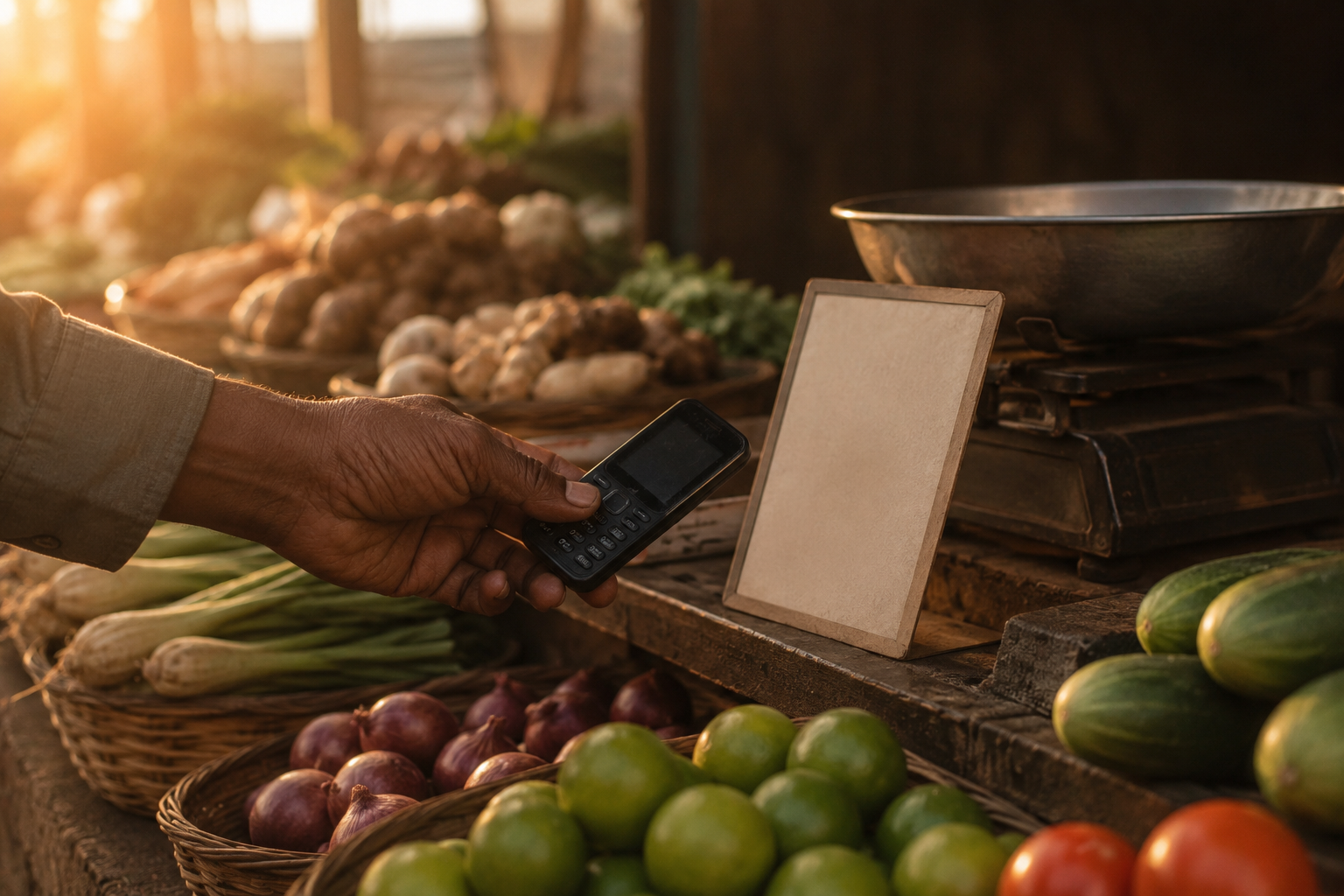
Count Again: Who Accepts Bitcoin Today
Start with arithmetic. Roughly 365 million people own Bitcoin, a population larger than the United States. They did not all acquire it by accident, and owning an asset is the first form of accepting it. Source: Triple-A ownership data
On the merchant side, the open BTC Map directory lists more than 23,000 physical businesses taking Bitcoin over the counter, a number that grew about 60 percent in the past year, and that only counts shops volunteers have found and verified.
Then come the rails most people already carry in their pockets. PayPal and Cash App let hundreds of millions of users buy, hold, and send Bitcoin. Square’s 2025 integration put Bitcoin payment support into the checkouts of roughly four million US merchants, which means a coffee shop does not need to believe in Bitcoin to accept it. The terminal handles it like any other tender. Gift-card services such as Bitrefill make it spendable at chains like Amazon and Starbucks, and US regulators have cleared banks to custody it. Whatever this is, it is not “no one.”
The version of the claim that survives the numbers is narrower. Most retail commerce does not yet run on Bitcoin, and most stores in wealthy countries see little demand for it. In much of the world, walking into a random shop and paying in Bitcoin is still hard. That is true, and the rest of this article explains why it is precisely what you would expect at this point in a money’s life.
The Map Tells the Real Story
Acceptance is not evenly spread, and the pattern is the argument. Chainalysis’s global adoption index is led year after year by emerging markets, not rich ones. In Nigeria and Argentina, where local currencies lose value by the month, a large share of the population uses Bitcoin and other digital assets for savings and commerce. Alex Gladstein of the Human Rights Foundation describes market traders in Malawi doing business and saving in Bitcoin after watching the kwacha lose nearly half its value overnight.
The same pattern holds where banking itself is the obstacle. Gladstein documents roughly 20,000 families in Gaza receiving aid over Bitcoin when conventional rails could not function, and teachers in Afghanistan paid in Bitcoin who spent it through local money markets. Alexei Navalny’s organization kept operating on Bitcoin donations for years after its bank accounts were frozen, because no authority could switch the network off. In the United States, legally operating but debankedCut off from banking services, when banks refuse to serve a person or business, often over politics or perceived risk. industries turned to Bitcoin for the same reason. None of these users are making a lifestyle statement. They accept Bitcoin because it is the money that still works when the official kind does not. Source: Human Rights Foundation, Bitcoin Development Fund
Acceptance does not begin at your grocery store. It begins where the money is broken, and it spreads outward from there.All Roads Lead to Bitcoin
Where Can You Spend Bitcoin Today
The standard technical objection is that Bitcoin’s base layer processes only a handful of transactions per second, far too few for the world’s checkouts. That is correct, and it is not the layer where checkouts happen. As Myth #18: Is Bitcoin Too Complicated? lays out, the base chain is a settlement layer, built for large, final transactions, while everyday payments run on layers built on top of it.
The Lightning NetworkA payment layer built on top of Bitcoin that settles small transactions almost instantly and at very low cost. is the coffee answer. Payments settle in seconds and cost a fraction of a cent, small enough for a coffee or a digital tip. El Salvador ran national remittancesMoney that people working abroad send home to family, often through slow and expensive transfer services. and street-stall purchases over it. And the Square integration matters precisely because it removes the decision from the merchant entirely; Bitcoin support arrives in the same terminal that takes cards, and acceptance becomes ambient infrastructure rather than an act of advocacy. The rails for mass acceptance are not hypothetical. Most are already in place, and they continue to expand.
Acceptance Has a Timeline
The deeper answer is that the myth measures Bitcoin against the wrong stage. In a framework Vijay Boyapati popularized in The Bullish Case for Bitcoin, a new money tends to move through stages, from collectible, to store of value, to medium of exchange, and finally unit of account. Gold spent centuries climbing that ladder. By that model, Bitcoin is mid-climb, transitioning from collectible to store of value, and broad merchant adoption would belong to a later stage.
Two ordinary reasons slow everyday spending, and neither is rejection. First, holders of an appreciating asset prefer not to spend it. Every Bitcoiner knows the story of the two pizzas bought in 2010 for bitcoin later worth hundreds of millions of dollars. An asset people are reluctant to spend is not failing as money. It is succeeding as savings, which is the stage it is in, and long-term holding research bears the pattern out. Source: River research Second, daily spending wants price stability, and Bitcoin’s volatility has declined with every market cycle as the asset matures. If that stability continues, the spending stage can follow.
El Salvador is the test case worth reading carefully. In 2021 it became the first country to make Bitcoin legal tenderMoney a government recognizes by law for settling debts and taxes, which businesses may be required to accept., and it ran remittances and everyday purchases over Lightning at national scale. In January 2025, under the terms of an IMF financing agreement, the law was amended. Business acceptance became voluntary and taxes returned to dollars, while the state kept accumulating Bitcoin reserves. The mandate ended, but the experiment continued. Acceptance that survives the removal of a legal requirement is a stronger signal than acceptance compelled by one. Sources: IMF Country Report 25/58 · Cointelegraph on the 2025 amendment
Acceptance Beyond the Shop Counter
Acceptance is not only a merchant question. MicroStrategy holds Bitcoin as its primary treasury asset. Investors like Paul Tudor Jones and Stanley Druckenmiller publicly adopted it as a hedge against currency debasement. The spot ETFsAn exchange-traded fund that holds actual bitcoin, giving investors exposure through a regulated brokerage account. run by BlackRock and Fidelity put Bitcoin inside millions of ordinary brokerage and retirement accounts, the same screens people use for index funds. And states have joined the miners’ side of the network. Kenya and Ethiopia monetize stranded energy by mining Bitcoin at the government level. Each layer of institutional acceptance makes the next merchant integration less remarkable, which is how network effects compound.
Which brings the skeptic’s observation full circle. Nobody in your checkout line is paying in Bitcoin, true, but not because no one accepts it. The reason is that you are standing where money still works. Acceptance concentrates where it is needed and spreads outward with stability, exactly as it did for every money before this one.
So the real question is not whether anyone accepts Bitcoin. With 365 million owners, twenty-three thousand mapped storefronts, and four million enabled checkouts, that part is settled. The question is what happens to the myth as acceptance keeps spreading the way it has so far. The claim that no one accepts Bitcoin only gets weaker with time.
This article is part of the Bitcoin Myths series. To explore the full Bitcoin Myths series, start with the hub page where 20 common myths are mapped and linked.
Go Deeper
The foundational account of how monies are adopted in stages, from collectible to store of value to medium of exchange. The framework this article’s timeline argument rests on.
Why billions of people live under failing money and broken payment rails, and why adoption concentrates exactly where this article’s map says it does.
A contemporary tour of Bitcoin’s infrastructure and adoption, from nodes and miners to the institutions and states now building on the network.
Want the shorter version? The Did You Know post covers this one in brief, and the infographic version puts the two maps side by side in one shareable one-pager.
Frequently Asked Questions
Who accepts Bitcoin?
More of the world than the myth suggests. About 365 million people own Bitcoin. More than 23,000 mapped merchants accept it over the counter, Square has enabled Bitcoin payments for roughly four million US businesses, and PayPal and Cash App support it inside apps used by hundreds of millions. Gift-card services make it spendable at chains like Amazon and Starbucks. Acceptance is heaviest in economies with failing currencies, such as Nigeria and Argentina, where it is used for everyday savings and commerce rather than novelty.
Can you actually buy things with Bitcoin?
Yes. You can pay merchants directly where it is accepted, spend it at major chains through gift-card services, and make small everyday purchases over the Lightning Network, which settles in seconds for a fraction of a cent. Square’s integration is wiring Bitcoin into ordinary store checkouts in the United States. In countries like El Salvador it has been used for everything from market stalls to national remittances. The practical question is no longer whether you can spend Bitcoin, but whether you want to spend an asset most holders prefer to save.
Why do more stores not accept Bitcoin?
Because money adopts in stages, and Bitcoin is still in the middle one. A new money becomes a store of value first and a medium of exchange later, once its price stabilizes. Today most holders treat Bitcoin as savings and prefer not to spend an appreciating asset, while most stores see little demand to price in it. That is a description of timing, not rejection. Volatility has declined every market cycle, payment rails like Lightning and Square are already built, and merchant acceptance grew about 60 percent in the last year alone.

In 2025, Square switched on Bitcoin payment support for roughly four million US merchants. Most of those business owners never made a decision about Bitcoin at all. Acceptance arrived inside the same terminal that takes credit cards, which is exactly how infrastructure spreads, not by conviction but by default.
Source: Block, Bitcoin payments on Square (official announcement)From the book
This myth is one chapter of Reasonable Doubt.
All twenty myths from this series, revised and rechecked, in one book you can read start to finish or hand to the skeptic in your life. Same standard as the site: the strongest version of each objection, the evidence, and a verdict that goes no further than the evidence does.
Paperback · $9.99 Kindle · $4.99 or free with Kindle Unlimited Listen on Spotify
New to Bitcoin? Start with the free guide, You Just Came Into Money. Now What?
Bitcoin Myths, Examined One by One
This article is part of the Bitcoin Myths series at allroadsbitcoin.com. Twenty claims about Bitcoin, each examined against the data. No price predictions. No hype. Just evidence.
Explore the Full SeriesMore from the Bitcoin Myths Series
- All 20 Myths
- Myth #1 · Energy
- Myth #2 · Volatility
- Myth #3 · Crime
- Myth #4 · Bubble
- Myth #5 · Gov Ban
- Myth #6 · Divisibility
- Myth #7 · Physical Form
- Myth #8 · Altcoins
- Myth #9 · Real Estate
- Myth #10 · Wallets
- Myth #11 · Exchanges
- Myth #12 · Reset
- Myth #13 · Gold
- Myth #14 · Intrinsic Value
- Myth #15 · Greater Fool
- Myth #16 · Miners
- Myth #17 · Ponzi
- Myth #18 · Complexity
- Myth #19 · Acceptance
- Myth #20 · Unit of Account
Everything on this site is for educational purposes only. It is not financial, investment, tax, or legal advice. Bitcoin carries real risk. Prices move. Do your own research, think for yourself, and speak with a qualified professional before acting on anything you read here.